Anxiety is loud… but it isn’t always telling you the truth.
Anxiety is one of the most common reasons people reach out for support. If you’ve been feeling constantly on edge, stuck in overthinking, or like your mind just won’t switch off, you’re not alone.

Anxiety can show up in so many ways, and it often makes everyday life feel harder than it needs to be.
So what is anxiety?
Anxiety at it’s core is your nervous system trying to protect you. It’s your brain scanning for danger and preparing you to respond. The problem is, sometimes that alarm system becomes overactive or sensitive, going off when you’re safe, or staying “on” long after the moment has passed.
You might notice:
Constant worry or overthinking
Physical symptoms like a racing heart, tight chest, or restlessness
Avoidance of certain situations
Feeling overwhelmed or easily overstimulated
Difficulty sleeping or switching off
For many people, especially young women and neurodivergent folk, anxiety can also be tied to masking, people-pleasing, or feeling like you have to hold everything together.
The anxiety cycle
Anxiety tends to follow a predictable loop:
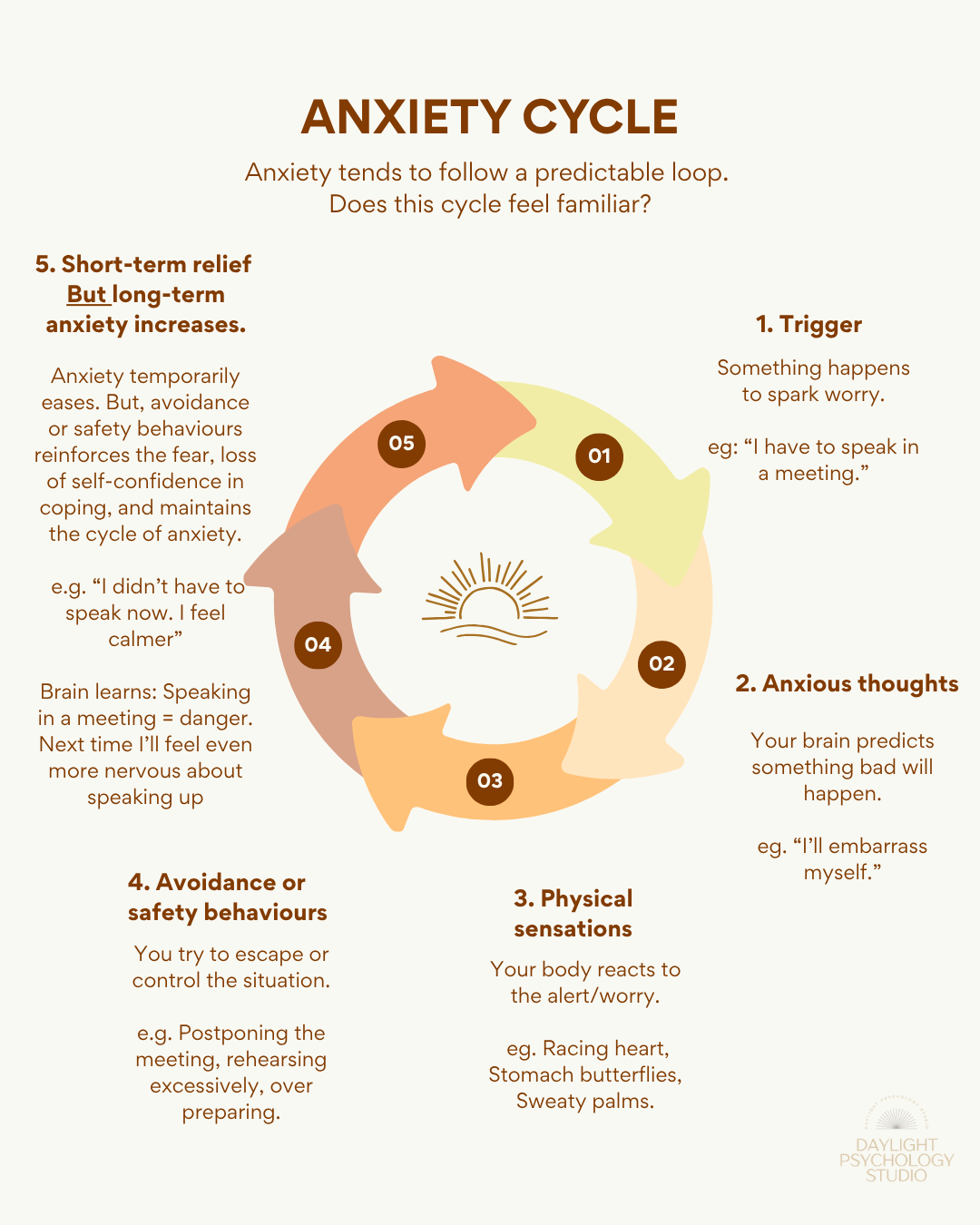
That short-term relief can feel helpful in the moment, but over time it teaches our brain that the situation really was dangerous and a threat, and thus keeps the cycle going.
How can I manage excessive anxiety
At Daylight Psychology Studio we take a warm, practical, and collaborative approach to anxiety treatment. Therapy isn’t about “fixing” you, it’s about helping you understand your mind and build tools that actually work in your real life.
1. Focus on understanding your anxiety
We start by helping you make sense of your unique anxiety patterns—what triggers it, how it shows up, and what keeps it going. This alone can be incredibly relieving.
2. Evidence-based therapy approaches
We draw from therapies like:
Acceptance and Commitment Therapy (ACT)
Cognitive Behavioural Therapy (CBT)
Dialectical Behaviour Therapy (DBT)
These approaches can help you:
Untangle from unhelpful thoughts
Build tolerance for uncomfortable feelings and distress
Reduce avoidance
Take meaningful action aligned with your values
3. Practical, everyday strategies
We focus on tools you can actually use, such as:
Grounding and nervous system regulation
Managing overthinking and worry loops
Gradual exposure to feared situations
Setting boundaries and reducing people-pleasing tendencies
4. Neurodiversity-affirming care
For clients who are Autistic or ADHDers, anxiety can often be impacted by overwhelm, sensory sensitivities, burnout, or years of masking. Our approach is neurodiverse-affirming, meaning we priotise working with your brain, not against it. We prioritise self-understanding, sustainable coping strategies, and reducing shame.
5. A space that feels human
We aim to create a space that feels warm, relaxed, and real. You don’t have to have the “right words” or have everything figured out. Therapy can include humour, honesty, and going at your pace.

What anxiety treatment can feel like
Over time, many clients notice:
Feeling less controlled by anxious thoughts
Increased confidence in handling difficult situations
More clarity and emotional steadiness
A stronger sense of self and what matters to them
Anxiety might not disappear completely, but it becomes something you can navigate, rather than something that runs your life.
Looking for anxiety support in Australia?
If you’re looking for anxiety therapy, working with a psychologist can help you feel more supported and equipped. At Daylight Psychology Studio we offer telehealth sessions across Australia and in person sessions at: 1/420 Sydney Road Coburg VIC 3058 Australia.
You don’t have to wait until things feel “bad enough.” If anxiety is impacting your life, support can make a meaningful difference. For more information book below.